
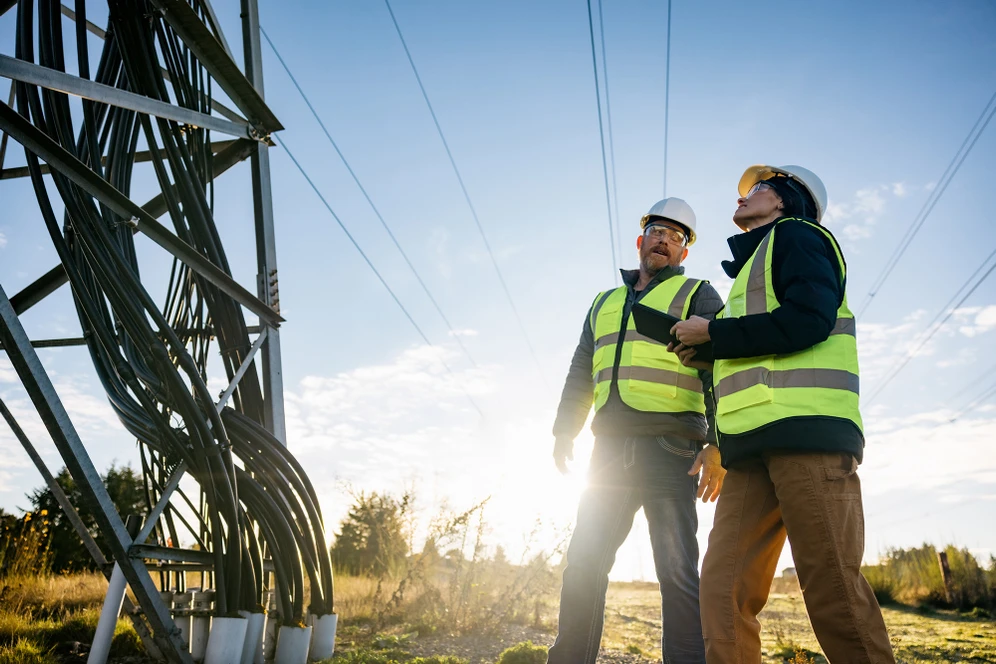
Workplace safety training can cover everything from ergonomics and emergency preparedness to fall protection, hazardous energy, personal protective equipment, and workplace violence prevention.
But that does not mean every employee needs every safety course.
The right training depends on the work employees perform, the environment where they perform it, and the hazards they may encounter.
An office employee may benefit from ergonomics and emergency preparedness training. Someone working around machinery may have very different needs. Employees who drive for work, use ladders, work around hazardous substances, or operate in construction environments may require training focused on those activities.
That makes one question particularly important when building a workplace safety training program:
Which safety topics are actually relevant to your employees?
Starting with workplace hazards and job responsibilities can help employers build a more focused training program instead of assigning the same courses to everyone.
Start With the Hazards Employees May Encounter
Safety training should have a reason behind it.
Before choosing courses, employers can consider the environments where employees work and the tasks they perform.
Questions might include:
- Do employees work around machinery or electrical equipment?
- Do they use ladders, scaffolds, forklifts, or elevated work platforms?
- Are hazardous substances present?
- Do employees work in hot environments?
- Do employees drive as part of their jobs?
- Could employees encounter blood or other potentially hazardous materials?
- Do employees use personal protective equipment?
- Are there ergonomic risks associated with the work?
- What types of emergencies could occur?
- Are there workplace violence concerns?
The answers help narrow a broad category like “safety training” into specific learning needs.
Employers can explore a broad selection of self-paced workplace safety training courses through the Workplace Safety Training collection, covering general safety awareness as well as more specialized occupational safety topics.
Build Everyday Safety Awareness
Not every workplace safety topic is limited to industrial or construction environments.
Many organizations have employees who could benefit from broader safety awareness.
Emergency preparedness is one example.
Employees should know how to respond when an unexpected situation occurs at work. Fire prevention, workplace violence awareness, driving safety, and ergonomics can also be relevant across a variety of work environments depending on employee responsibilities.
The Workplace Safety Training collection includes courses such as:
- Emergency Preparedness
- Ergonomics in the Workplace
- Fire Prevention Safety
- Driving Safety and Defensive Driving
- Workplace Violence Prevention
- Active Shooter Event
This makes it possible for organizations to begin with broader workplace risks before adding training for more specialized hazards.
Match Training to Job Responsibilities
A strong safety training program should reflect what employees actually do.
Someone who never works around a forklift may not benefit from forklift-focused training. An employee who regularly works around machinery, on the other hand, may need education across several related safety topics.
Organizations can group employees according to similar responsibilities or exposures and develop training paths for those groups.
For example:
Office and Administrative Employees
Depending on the workplace, relevant topics might include ergonomics, emergency preparedness, fire prevention, driving safety, or workplace violence prevention.
Warehouse and Operations Employees
Training may include forklift safety, hazard communication, PPE, walking-working surfaces, ladder safety, ergonomics, or emergency preparedness.
Construction and Field Employees
Depending on their work, employees may need education involving fall protection, excavation and trenching, caught-in or caught-between hazards, struck-by hazards, scaffolds, electrical safety, or elevated work platforms.
Employees Working Around Hazardous Materials or Equipment
Potential topics may include hazard communication, respiratory protection, PPE, lockout/tagout, machine guarding, or bloodborne pathogen safety.
These are examples of how organizations can think about training categories, not a universal training prescription. Employers should determine appropriate training based on their own workplace, workforce, and applicable requirements.
Address Common Workplace Hazards
Some safety issues can appear across many different industries.
Slips, trips, falls, lifting, electrical hazards, fire risks, and emergency situations are not limited to one type of workplace.
Training can help employees recognize these hazards and understand the practices their organization expects them to follow.
Courses such as Walking-Working Surface Safety, Electrical Safety Awareness, Fire Prevention Safety, and Hazard Identification and Risk Assessment provide employers with options for building broader hazard awareness.
Employers can review these courses and other topics through the workplace safety training page.
Consider Ergonomics and Everyday Work Habits
Not every workplace hazard is dramatic. Some develop gradually through everyday work.
Employees may spend hours sitting at a desk, lifting materials, repeating the same movements, or working in positions that place unnecessary strain on the body.
Ergonomics training can help employees become more aware of these risks and the habits that may contribute to them.
This can make ergonomics a useful consideration beyond workplaces traditionally associated with occupational safety.
Office employees, warehouse workers, manufacturing employees, and others may encounter very different ergonomic challenges, but the underlying objective is similar: helping employees understand how their work environment and movements can affect their safety.
Prepare Employees for Emergencies
Organizations cannot predict every emergency. They can help employees become more familiar with how to respond when one occurs.
Emergency preparedness training can address issues such as evacuation, emergency procedures, communication, and employee responsibilities.
Depending on the workplace, employers may also consider more focused topics such as fire prevention, active shooter response, workplace violence prevention, or first-response considerations relevant to employee duties.
Online training can provide foundational awareness, while employers can reinforce that learning with organization-specific procedures, drills, instructions, and workplace information.
A general online course can teach foundational concepts, while employees still need to understand the procedures specific to the workplace where they actually work.
Provide Specialized Training Where the Work Requires It
Some employees face hazards that require more focused education.
The safety library includes courses covering areas such as:
- Bloodborne pathogens
- Confined spaces
- Excavation and trenching
- Fall protection
- Forklift safety
- Heat illness prevention
- Ladder safety
- Lockout/tagout
- Machine guarding
- Noise and hearing conservation
- Personal protective equipment
- Respiratory protection
- Scaffold safety
- Struck-by hazards
- Hazard communication
- Aerial and scissor lifts
Organizations should select specialized training based on the work employees perform and the hazards present in their environment rather than simply assigning every available safety course.
The Workplace Safety Training collection makes it easier to review available topics and identify courses relevant to different employee groups.
Don't Assume Online Training Is the Entire Safety Program
Online safety training can be an efficient way to build awareness and provide consistent instruction across employees, locations, and schedules.
But a course is only one part of workplace safety.
Some jobs and hazards may require hands-on instruction, equipment-specific training, demonstrations, workplace procedures, or other forms of preparation in addition to online learning.
Employers should therefore think of eLearning as one component of the broader safety program.
Online courses can provide employees with foundational knowledge before employers reinforce that learning through workplace-specific instruction.
For example, an employee may complete an online PPE course to learn general principles and then receive workplace-specific instruction on the equipment used for their particular job.
The same approach can apply to machinery, emergency procedures, fall protection, hazardous materials, and other specialized safety topics.
Build Different Safety Training Paths for Different Employees
Once employers identify workplace hazards and employee responsibilities, they can begin grouping courses into practical learning paths.
Some employees may need only one focused course. Others may need several related safety courses.
An organization with significant occupational safety needs may want broader access across the training library.
The flexible online training plans allow employers to choose the level of access for each learner:
1 Course – $24.95 per learner
Useful when an employee needs one focused safety course or refresher.
5 Courses – $32.95 per learner
Can support a targeted safety training path built around several related workplace hazards.
10 Courses – $39.95 per learner
Provides broader access for employees whose responsibilities involve multiple safety topics.
Full Library – $44.95 per learner
Provides access to 100+ workplace courses, including safety, compliance, harassment prevention, professional development, privacy, security awareness, and ethics training.
Standard plans include one year of LMS access, personalized setup, completion tracking, reporting, and certificates.
This allows an organization to provide different employees with different training instead of purchasing identical access for everyone.
Make Safety Training Easier to Manage
As the number of employees and courses grows, administration becomes part of the challenge.
Someone needs to know:
- Who has been assigned training?
- Who has started?
- Who has completed it?
- Which courses has each employee taken?
- Where are the completion records?
An LMS can help centralize that information.
Standard eLearning plans include access to the fpSOLUTIONS learning management system, allowing employers to assign courses, monitor learner activity, review completion status, maintain training records, and access certificates.
Organizations that already have their own LMS can also ask about SCORM-compatible delivery options.
That gives employers flexibility in how safety training fits into their existing learning infrastructure.
Ready to Build Your Workplace Safety Training Program?
Start with the hazards employees actually encounter. Then select training based on their work.
Employers can browse the full selection of workplace safety training courses through the Workplace Safety Training collection.
The library includes courses covering:
- Emergency preparedness
- Ergonomics
- Electrical safety
- Fall protection
- Fire prevention
- Forklift safety
- Hazard identification
- Heat illness prevention
- Ladder safety
- Lockout/tagout
- Machine guarding
- PPE
- Respiratory protection
- Hazard communication
- Workplace violence prevention
- Construction and occupational hazards
- Additional workplace safety topics
Organizations can purchase one focused course or build broader safety learning paths through the online workplace training plans.
Want to see how the training works? Request a training demo.
Frequently Asked Questions
What is workplace safety training?
Workplace safety training helps employees recognize hazards, understand safe work practices, and build awareness around risks relevant to their jobs and work environments.
What topics can workplace safety training cover?
Training may cover emergency preparedness, ergonomics, electrical safety, fall protection, fire prevention, forklifts, hazard communication, PPE, respiratory protection, workplace violence, machine guarding, lockout/tagout, and other occupational safety topics.
Does every employee need the same safety training?
Not necessarily. Safety training should reflect an employee's job responsibilities, workplace environment, and the hazards they may encounter.
Can workplace safety training be completed online?
Many safety topics can include an online learning component. Depending on the work and hazard involved, employers may also need workplace-specific, hands-on, equipment-specific, or other forms of instruction.
Does fpSOLUTIONS offer OSHA-related safety training?
The Workplace Safety Training collection includes courses covering numerous OSHA-related and occupational safety topics, including hazard communication, PPE, fall protection, lockout/tagout, respiratory protection, workplace hazards, and other areas.
Can I purchase only one workplace safety course?
Yes. Employers can select one course per learner or choose five-course, ten-course, or full-library access depending on their training needs.
Can safety courses be delivered through our existing LMS?
Organizations with their own learning management system can ask about SCORM-compatible delivery options.
Build Safety Training Around the Work Your Employees Actually Do
The question is not how many safety courses an organization can assign. It is which training will help employees better understand the hazards associated with their work.
For one employee, that may mean ergonomics. For another, it may mean PPE, hazard communication, and respiratory protection.
Another employee may need training related to forklifts, fall protection, machinery, emergency preparedness, or workplace violence.
The Workplace Safety Training collection gives employers a broad range of online safety courses to choose from, while flexible employee training plans allow organizations to match course access to different learner needs.
Explore the Workplace Safety Training collection, compare eLearning plans, or request a training demo.
Start with the work. Identify the hazards. Then build the training around the people who encounter them.